Recurrent Infections: The Missed Allergy Diagnosis
A child treated repeatedly for recurrent infections was actually suffering from an undiagnosed allergy. Allergy Diagnosis through advanced IgE profiling revealed the real cause, enabling accurate treatment and significantly improved clinical outcomes.
Case Study: A Pediatric Allergy Diagnostic
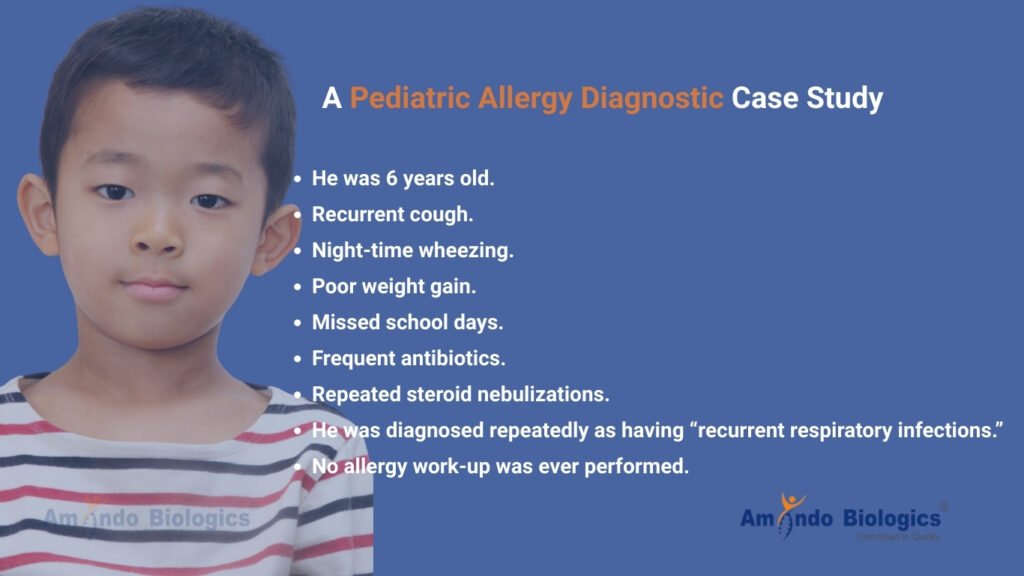
A Pediatric Allergy Diagnostic Case Study
(Intent: Improve diagnostic accuracy, efficiency, margins, and clinician confidence
Audience: Laboratory directors, pediatricians, pulmonologists, clinical pathologists)
He was 6 years old.
Recurrent cough.
Night-time wheezing.
Poor weight gain.
Missed school days.
Frequent antibiotics.
Repeated steroid nebulizations.
He was diagnosed repeatedly as having “recurrent respiratory infections.”
No allergy work-up was ever performed.
What Is The Most Common Missed Cause of Recurrent Infections in Children?
Undiagnosed allergic rhinitis and asthma are the most common missed causes of recurrent infections in children. IgE-mediated allergic airway disease frequently mimics infection, leading to repeated antibiotics and delayed correct diagnosis.
What Was Actually Happening?
He did not have repeated infections.
He had chronic allergic respiratory disease.
Allergic rhinitis and asthma frequently mimic sinusitis and infection in children, leading to misdiagnosis and inappropriate long-term antibiotic and steroid exposure.
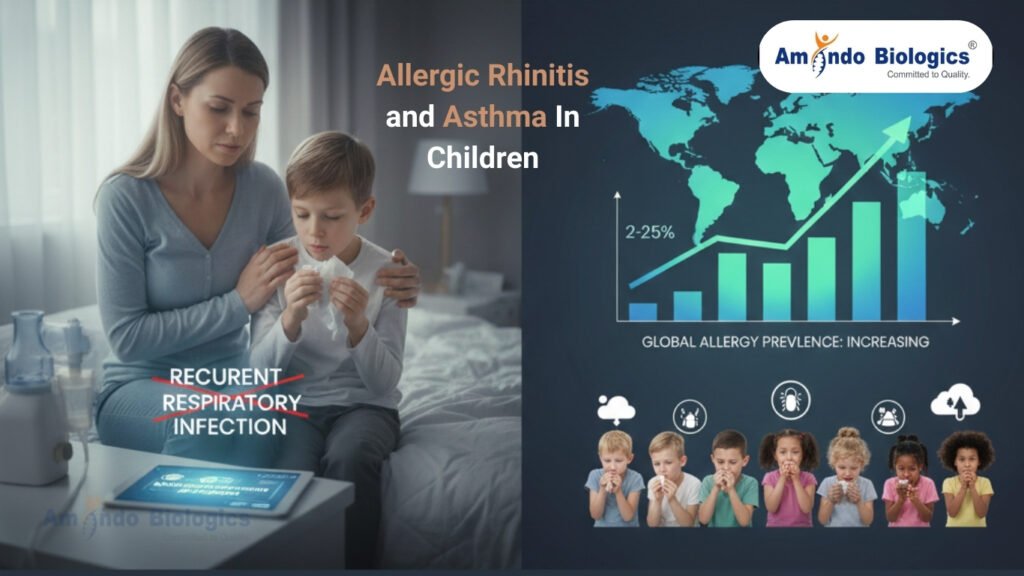
Allergic rhinitis and asthma in children often present with symptoms that mimic infection and sinusitis, leading to misdiagnosis and inappropriate treatment. Globally, allergic rhinitis affects an estimated 2–25% of children, and the prevalence is increasing with age and environmental exposures. Springer
Where the Diagnostic Failure Happened
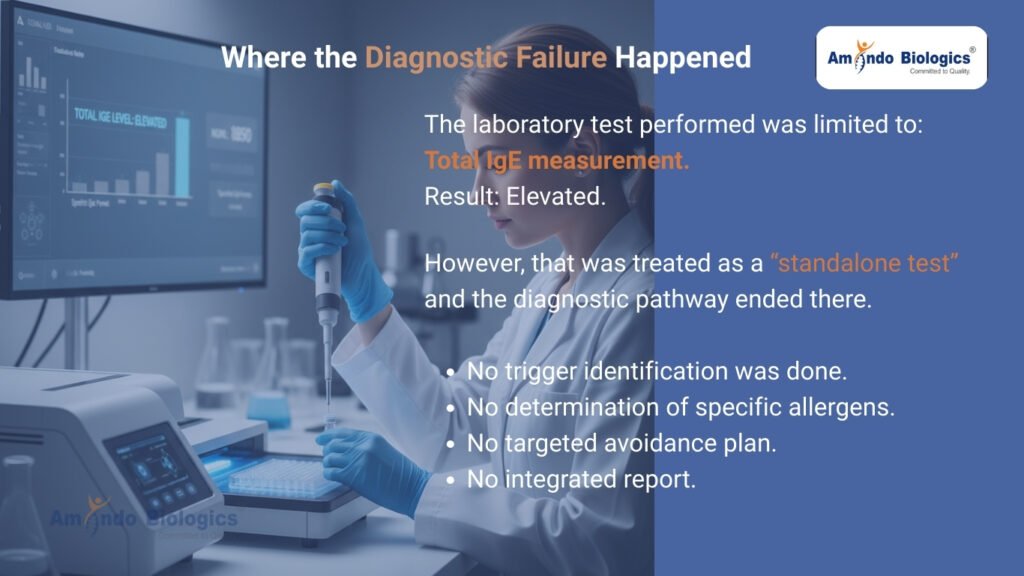
The laboratory test performed was limited to:
Total IgE measurement.
Result: Elevated.
However, that was treated as a “standalone test” — and the diagnostic pathway ended there.
No trigger identification was done.
No determination of specific allergens.
No targeted avoidance plan.
No integrated report.
Why Diagnostic Failure Matters
Total IgE reflects general allergic sensitization but cannot identify which allergen is responsible for symptoms. Total IgE can also be elevated in a wide range of atopic conditions, and its levels increase with age in children with allergic diseases. MDPI
Without knowing the trigger:
• Environmental allergens (dust mites, pollens, molds) remain unaddressed
• Food allergies continue unrecognized
• Asthma control remains suboptimal
• Steroid dependency increases
This pattern reflects a broken diagnostic gate, not a single test deficiency.
Allergic rhinitis affects 20–40% of children globally, with increasing prevalence and major impact on sleep, school performance, and asthma progression.
(Source: Frontiers in Immunology; NCBI PMC)
Specific IgE testing is the accepted laboratory method for identifying allergen triggers and guiding avoidance-based management.
(Source: NCBI StatPearls, RAST principles)
What Is The Correct Allergy Diagnostic Architecture
| Diagnostic Gate | Clinical Question | Correct Test |
| Gate-1 | Is this an allergic condition present? | Total IgE ELISA |
| Gate-2 | What is the specific trigger? | Specific IgE ELISA / Allergy LIA Panels |
| Gate-3 | Clinically relevant confirmation | Integrated interpretation + avoidance plan |
Total IgE should trigger profiling — not end the pathway.
What Changed the Child’s Disease Course
A structured allergy diagnostic workflow was finally applied:
- Total IgE ELISA (screening)
- Allergy LIA Pediatric Panel (profiling)
- Specific IgE ELISA (trigger identification)
The results showed strong sensitization to:
• House dust mite aeroallergens
• Milk protein allergens
This guided the clinician to:
• Dietary elimination
• Environmental allergen avoidance
• Tailored therapy
Within weeks:
• Night wheezing reduced
• Antibiotic usage stopped
• Growth improved
• School attendance normalized
Why Allergy Trigger Identification Matters?
Allergic rhinitis and asthma in children often coexist and reflect IgE-mediated (Type I) hypersensitivity, driven by specific IgE binding to allergens and causing inflammation at local tissues. Wikipedia
Specific IgE measurement — especially by structured panels — identifies the actual allergic trigger, allowing clinicians and labs to go beyond mere suspicion to actionable diagnosis. Serum tests for specific IgE are widely accepted as part of the diagnostic work-up in suspected allergic disease, particularly when skin tests are impractical. Wikipedia
Pediatric Allergy: Prevalence & Importance
Allergic rhinitis is one of the most common chronic conditions in children. Studies have shown that:
• Allergic rhinitis symptoms occur in approximately 20–40% of children by age 6. Frontiers
• Epidemiological studies indicate that allergic rhinitis is a frequent cause of nasal symptoms lasting weeks and affecting quality of life, school performance, and sleep. PMC
• A significant proportion of children with chronic rhinitis symptoms have allergic sensitization detected by specific IgE or skin testing. PMC
These data show that allergic disease in children is both common and clinically consequential — and that structured testing is not academic, but diagnostically necessary.
Amindo Allergy Infrastructure
In this case and many similar ones, a structured laboratory approach makes all the difference:
Screening:
• Total IgE ELISA
Profiling:
• Specific IgE ELISA
• Allergy LIA Pediatric Panel
• Allergen-specific interpretation
We do not sell allergy kits.
We architect allergy diagnosis.
This is how labs differentiate themselves — by offering clinically defensible, evidence-based diagnostic pathways, not single tests.
Key Scientific Takeaways
• Elevated Total IgE alone does not identify the trigger.
• Specific IgE measurement is crucial for actionable results.
• Allergy prevalence in children is significant and increasing.
• Structured laboratory pathways improve patient outcomes.
These points are no longer opinion — they are evidence-backed clinical logic.
If your lab stops at Total IgE, pediatric allergy remains unidentified — and treatable disease stays untreated.
Recurrent infections in children are frequently misdiagnosed allergic airway disease rather than true infections. Total IgE alone is insufficient. Structured Specific IgE profiling is required to identify allergen triggers and enable targeted avoidance-based management.
FAQs:
What is the most common missed cause of recurrent infections in children?
Undiagnosed allergic rhinitis and asthma are the most common missed causes of recurrent infections in children. IgE-mediated allergic airway disease frequently mimics infection, leading to repeated antibiotics and delayed correct diagnosis.
Why is Total IgE alone insufficient in pediatric allergy?
Total IgE indicates allergic tendency but does not identify the causative allergen. Without trigger identification, avoidance and disease control are not possible.
When should labs reflex from Total IgE to profiling?
Whenever Total IgE is elevated or when clinical suspicion of allergy exists, reflex to Specific IgE or Allergy LIA Panels is recommended.
Which allergens are most commonly missed in children?
House dust mite, milk, egg, peanut, mold, pollen, and animal dander allergies are frequently missed when profiling is skipped.
How does profiling improve laboratory efficiency and margins?
It prevents repeated testing, reduces antibiotic misuse, and increases diagnostic yield per sample improving margins and clinical trust.
Which Amindo kits support complete pediatric allergy diagnostics?
| Gate | Amindo Products |
| Screening | Total IgE ELISA |
| Profiling | Specific IgE ELISA |
| Profiling | Allergy LIA Pediatric Panels |
Can this workflow be applied to adults?
Yes. The same screening → profiling architecture applies to adult asthma, chronic rhinitis, and steroid-dependent allergic disease.
How does this reduce medico-legal risk?
By preventing false reassurance, delayed diagnosis, and inappropriate long-term therapy based on incomplete laboratory evaluation.
This pediatric case study demonstrates that recurrent infections in children are often an undiagnosed allergic disease. Structured IgE profiling improves diagnostic accuracy, reduces unnecessary antibiotics, and improves clinical outcomes.
This case represents a composite clinical scenario derived from published pediatric allergy epidemiology and common OPD/NICU presentations, shared for diagnostic awareness and laboratory workflow education purposes.
At Amindo Biologics, we enable structured, clinically actionable allergy diagnostics.
Our Total IgE ELISA, Specific IgE ELISA, and Allergy LIA Panels (Inhalant, Food, Pediatric) provide standardized, high-performance allergen profiling—supporting accurate trigger identification, reduced interpretive ambiguity, and confident clinical decision-making.
We do not detect an allergy.
We architect an allergy diagnosis.