How To Prevent Neonatal Adrenal Crisis: A CAH Case from the NICU
NICU case study of preventable neonatal adrenal crisis in congenital adrenal hyperplasia due to delayed 17-OHP screening and missed early diagnosis.
Preventing Adrenal Collapse Through Early Detection
Case Study: Clinical Presentation
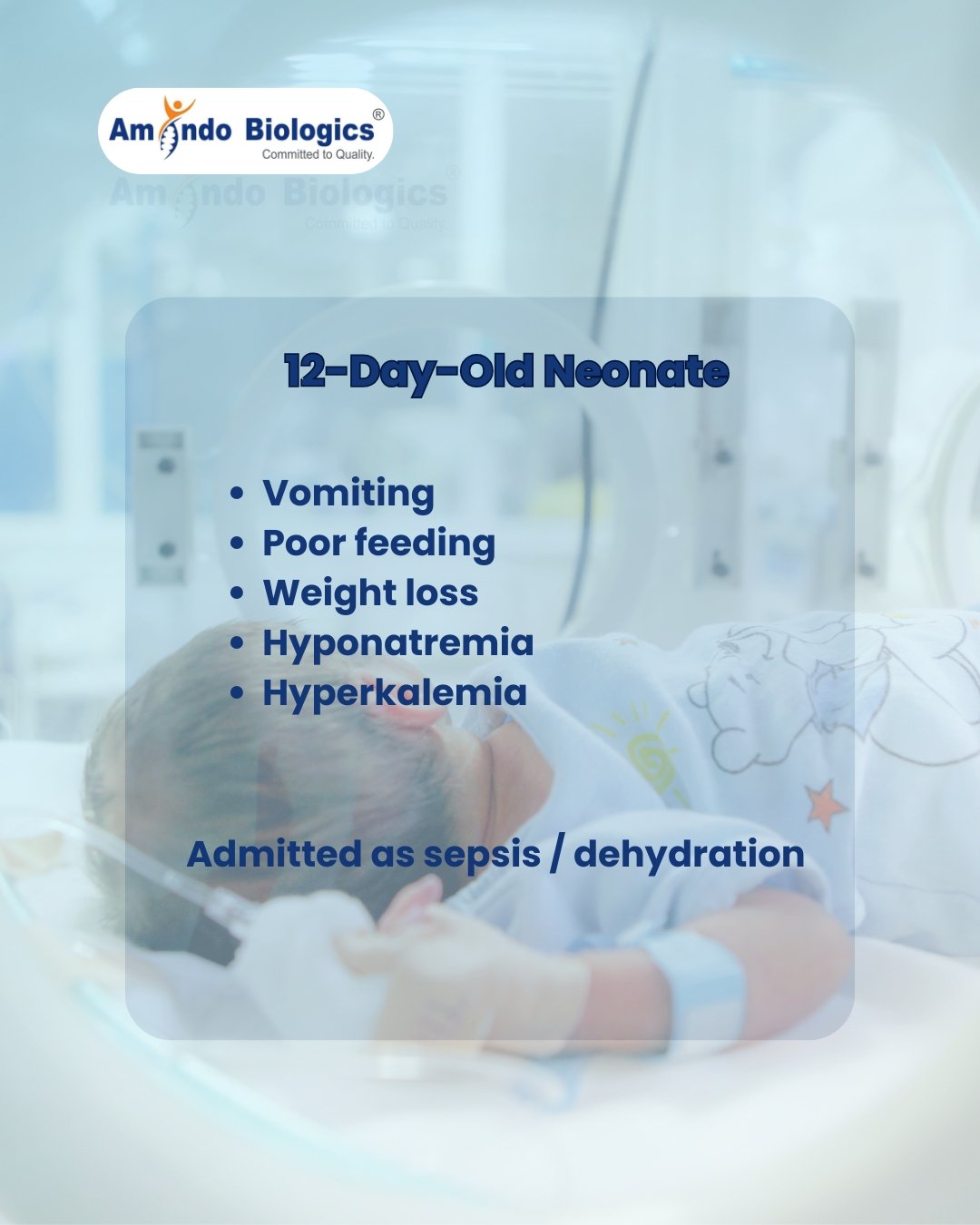
A 12-day-old male neonate was intermittently admitted to the NICU with:
• Repeated vomiting
• Poor feeding and lethargy
• Progressive weight loss
• Hyponatremia (low serum sodium)
• Hyperkalemia (elevated serum potassium)
The initial working diagnoses were sepsis and dehydration — common neonatal differentials. Empiric broad-spectrum antibiotics were administered, and intravenous fluid resuscitation was undertaken. Despite negative culture results and supportive care, the infant’s clinical status continued to deteriorate.
Diagnostic Pivot: 17-OHP Measurement
On the third admission, a 17-hydroxyprogesterone (17-OHP) level was finally ordered as part of an expanded endocrine evaluation.
Result: Severely elevated 17-OHP.
Follow-up endocrine confirmation supported the diagnosis of salt-wasting congenital adrenal hyperplasia (CAH) due to 21-hydroxylase deficiency — the most common form of CAH worldwide. Patients with this condition are unable to produce adequate cortisol and aldosterone, leading to accumulation of 17-OHP and catastrophic salt loss. PMC+1
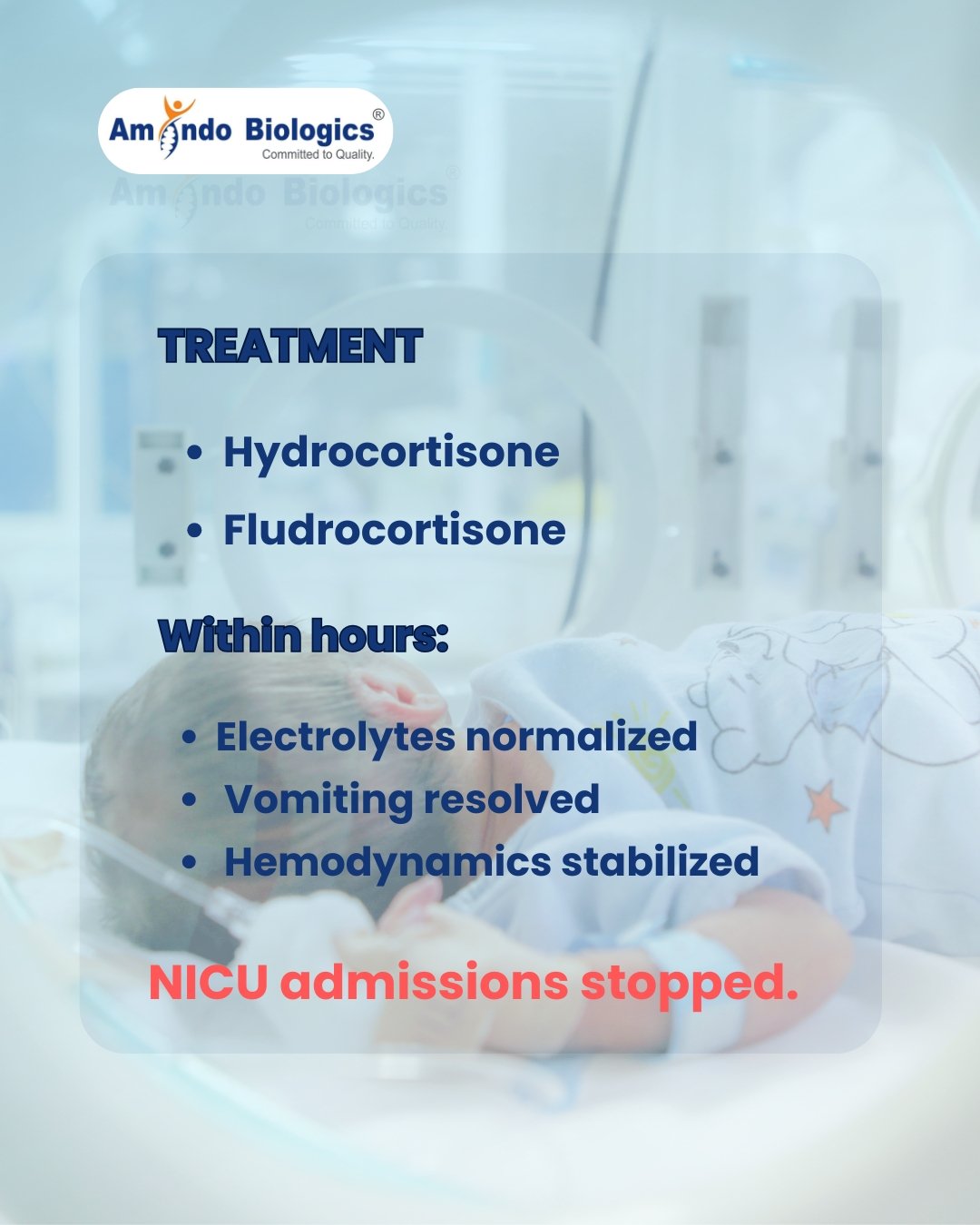
Immediate treatment was initiated with:
• Hydrocortisone (glucocorticoid replacement)
• Fludrocortisone (mineralocorticoid support)
Within hours of therapy:
• Electrolyte abnormalities corrected
• Vomiting resolved
• Hemodynamic stability returned
Subsequent NICU reviews showed no further admissions, and the infant progressed clinically.
Clinical Interpretation: Why This Happens
Classic salt-wasting CAH due to 21-hydroxylase deficiency often presents within the first 1–2 weeks of life because impaired cortisol and aldosterone synthesis leads to:
• Salt loss (hyponatremia)
• Potassium retention (hyperkalemia)
• Hypovolemia and shock-like presentation
• Poor feeding and lethargy
This constellation may mimic neonatal sepsis or dehydration, making biochemical screening essential in differential diagnosis. Wikipedia
Neonates may initially appear normal and only demonstrate metabolic imbalances as the adrenal insufficiency progresses — especially when aldosterone and cortisol are critically low — leading to salt-wasting crisis and circulatory collapse. Wadsworth Center
Diagnostic Logic in Neonatal Endocrinology
Salt-wasting CAH is biochemically defined by:
• Elevated 17-OHP (due to upstream accumulation)
• Low cortisol synthesis
• Inadequate aldosterone production
• Elevated ACTH due to loss of cortisol feedback
Measurement of 17-OHP remains the primary biochemical gate for detecting classic CAH in newborn screening and clinical practice. This is the rationale behind its incorporation into newborn panels in many screening programs. PMC
Why Electrolytes Are a Late Indicator?
Electrolyte disturbances (hyponatremia, hyperkalemia) reflect advanced adrenal collapse, but do not detect early enzyme deficiency. That’s why:
• Electrolytes detect crisis
• 17-OHP prevents crisis
This case underscores that screening markers must precede crisis markers in diagnostic workflows.
Evidence from Neonatal Screening Literature
Newborn screening for CAH using 17-OHP has been widely adopted in many regions because it has been shown to reduce morbidity and mortality associated with salt-wasting crisis. For example, screening programs report improved detection of salt-wasting CAH before clinical deterioration. WVDHHR
However, screening performance is affected by gestational age and timing of sampling, especially in preterm infants, and requires careful interpretive algorithms to balance sensitivity and specificity. ResearchGate
What Are The Clinical Takeaways for Practice?
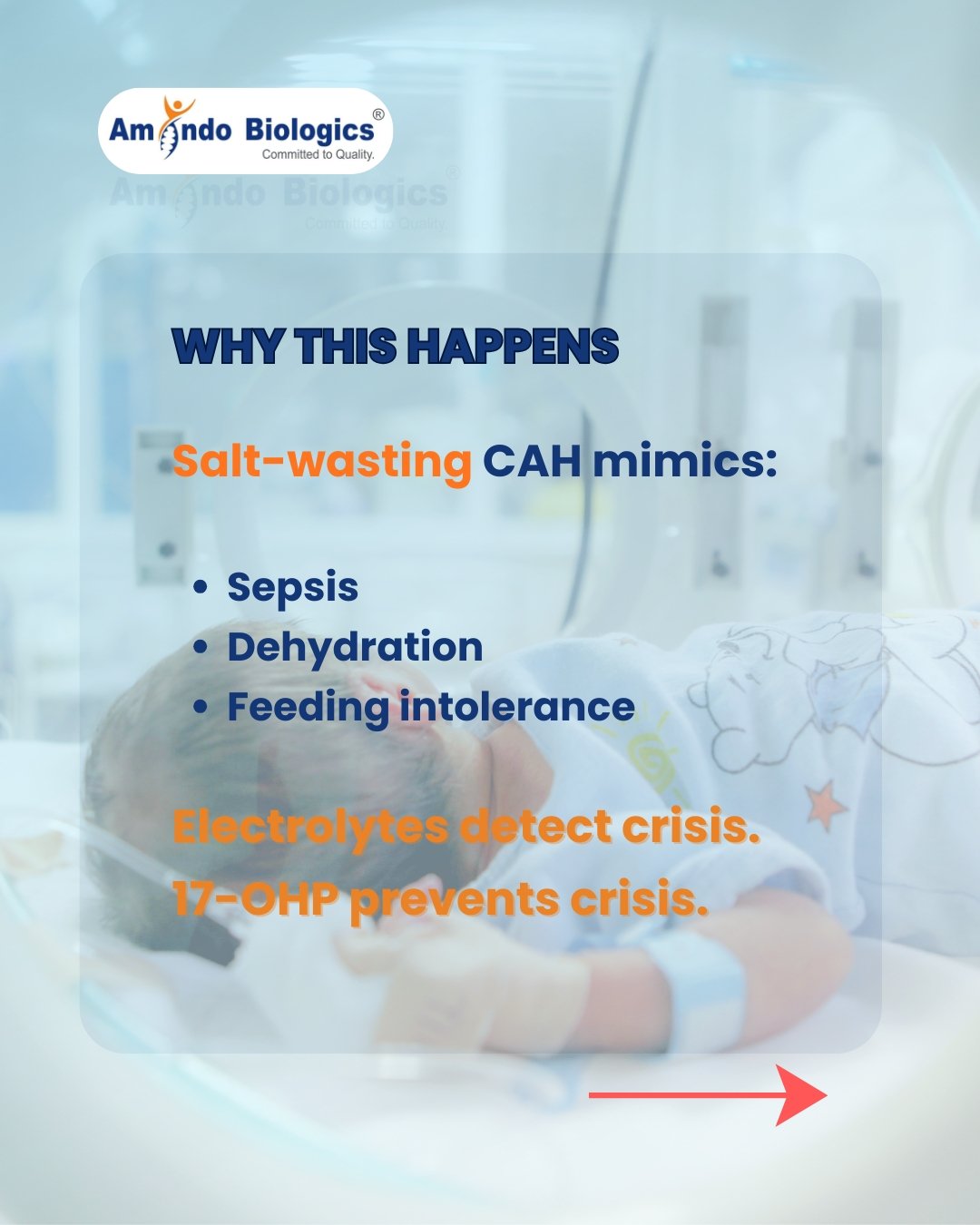
- Salt-wasting CAH can mimic common neonatal conditions such as sepsis, dehydration, and feeding intolerance — making clinical diagnosis alone unreliable.
- 17-OHP measurement is the first biochemical gate: it detects enzyme deficiency before symptomatic adrenal collapse.
- Electrolyte changes are late markers and should not be used as screening tools.
- Structured endocrine workflows save lives — early screening → confirmatory testing → immediate treatment.
The Diagnostic Architecture (for reference)
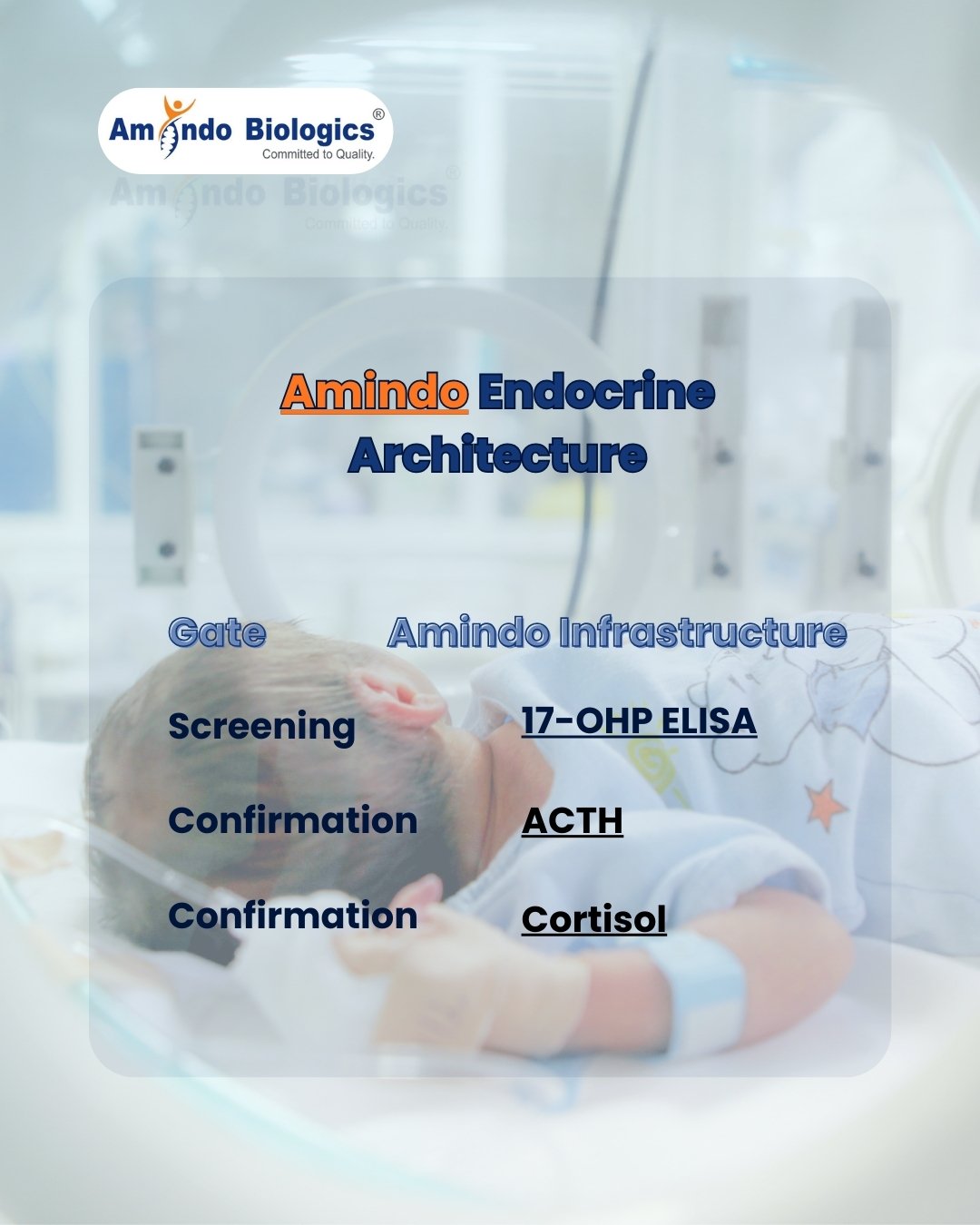
| Diagnostic Gate | Clinical Purpose | Optimal Test |
| Gate-1 | Screen for enzyme deficiency | 17-OHP level |
| Gate-2 | Detect metabolic crisis | Serum Na⁺ / K⁺ |
| Gate-3 | Confirm endocrine origin | ACTH / Cortisol |
Diagnostic Architecture
This case exemplifies how failure to include 17-OHP in newborn diagnostic panels can lead to repeated NICU admissions, delayed diagnosis, and preventable morbidity. In contrast, early 17-OHP screening correlates with:
• Prompt diagnosis
• Timely treatment
• Dramatically improved clinical outcomes
If 17-OHP screening is not part of your newborn evaluation, your NICU is operating without a neonatal endocrine safety net.
References:
- Held PK, et al. Newborn Screening for Congenital Adrenal Hyperplasia. PMC. https://pmc.ncbi.nlm.nih.gov/articles/PMC7569755/
- Levy-Shraga Y, Pinhas-Hamiel O. High 17-hydroxyprogesterone level in newborn screening test for CAH. PMC. https://pmc.ncbi.nlm.nih.gov/articles/PMC4769481/
- Congenital adrenal hyperplasia due to 21-hydroxylase deficiency. Wikipedia. https://en.wikipedia.org/wiki/Congenital_adrenal_hyperplasia_due_to_21-hydroxylase_deficiency
- Newborn screening for CAH effectiveness. (WVDHHR) https://www.wvdhhr.org/nbms/diseases/Congenital_Adrenal_Hyperplasia.asp
- Indian Pediatrics guidelines on CAH screening incidence. https://www.indianpediatrics.net/jan2020/49.pdf
FAQ:
FAQ 1: What is the most common cause of adrenal crisis in newborns?
The most common cause of adrenal crisis in neonates is salt-wasting congenital adrenal hyperplasia (CAH) due to 21-hydroxylase deficiency, which accounts for over 95% of classic CAH cases. Without early biochemical screening, affected newborns often present with vomiting, dehydration, electrolyte imbalance, and shock-like features that mimic sepsis.
FAQ 2: Why does salt-wasting CAH mimic neonatal sepsis?
Salt-wasting CAH causes cortisol and aldosterone deficiency, leading to:
- Hypovolemia
- Hyponatremia
- Hyperkalemia
- Poor stress response
These physiological effects closely resemble neonatal sepsis, dehydration, or feeding intolerance. Because cultures are often negative and symptoms are non-specific, CAH is frequently misclassified unless 17-OHP screening is performed.
FAQ 3: Why is 17-OHP considered the primary screening marker for CAH?
17-hydroxyprogesterone (17-OHP) accumulates early when 21-hydroxylase is deficient, before electrolyte collapse or clinical deterioration occurs. This makes 17-OHP the earliest detectable biochemical marker of classic CAH and the globally accepted first-tier newborn screening test.
FAQ 4: Can electrolytes alone rule out congenital adrenal hyperplasia?
No. Electrolyte abnormalities appear after adrenal collapse has already begun. By the time hyponatremia and hyperkalemia are detected, the newborn may already be in crisis.
Electrolytes detect collapse.
17-OHP prevents collapse.
FAQ 5: When should 17-OHP testing be performed in newborns?
17-OHP should be performed:
- As part of routine newborn screening, ideally within the first 48–72 hours of life
- Immediately in neonates with unexplained vomiting, dehydration, shock, or electrolyte imbalance
Early testing prevents delayed diagnosis and repeat NICU admissions.
FAQ 6: Is congenital adrenal hyperplasia really a rare disease?
No. While older estimates suggested CAH incidence of 1:10,000–20,000 births, Indian newborn screening studies report rates as high as 1:5,762, with regional variability up to 1:2,036 births. In high-birth-volume countries, CAH represents a population-level neonatal risk, not a rarity.
FAQ 7: Why do preterm infants show higher 17-OHP levels, and does this limit screening?
Preterm and low-birth-weight infants have physiologically higher 17-OHP due to adrenal immaturity. However, this does not invalidate screening. Modern diagnostic workflows apply:
- Gestational-age-adjusted cutoffs
- Birth-weight-stratified interpretation
- Reflex confirmatory testing
Structured ELISA-based screening maintains sensitivity while improving specificity.
FAQ 8: Why is ELISA the preferred platform for 17-OHP screening?
ELISA is preferred because it offers:
- Quantitative cut-off-based reporting
- High analytical reproducibility
- Batch-to-batch standardization
- High throughput for newborn programs
- LIS integration and reflex workflows
These features are essential for NICUs, newborn screening labs, and high-volume endocrine diagnostics.
FAQ 9: What diagnostic tests should follow an elevated 17-OHP result?
A structured endocrine reflex pathway includes:
- 17-OHP ELISA – Screening
- Serum Sodium & Potassium – Crisis assessment
- ACTH and Cortisol – Endocrine confirmation and disease classification
This layered approach ensures rapid stabilization and accurate diagnosis.
FAQ 10: How does structured CAH screening reduce medico-legal risk for hospitals?
Early 17-OHP screening:
- Prevents missed diagnoses
- Reduces repeat NICU admissions
- Avoids unnecessary antibiotic exposure
- Demonstrates adherence to international standards of care
This significantly improves clinical defensibility in adverse neonatal outcomes.
FAQ 11: Which laboratories should routinely offer 17-OHP testing?
17-OHP testing should be routinely available in:
- NICUs and neonatal units
- Newborn screening laboratories
- Pediatric reference labs
- Government and corporate hospital networks
Any facility managing newborns without access to 17-OHP screening is operating with a diagnostic blind spot.
FAQ 12: How does Amindo Biologics support CAH diagnostic workflows?
Amindo Biologics provides complete neonatal endocrine diagnostic architecture, including:
- 17-OHP ELISA for first-tier screening
- ACTH for confirmation
- Cortisol for functional adrenal assessment
This enables laboratories to deliver clinically defensible, standardized, and life-saving newborn diagnostics.
Disclaimer: This case study is presented for professional educational purposes only. The clinical scenario described is a representative composite based on published literature and common neonatal endocrine presentations. Patient identifiers have been altered or omitted to protect privacy. This content does not substitute institutional newborn screening protocols, clinical judgment, or individualized patient management decisions.
At Amindo Biologics, we enable structured, clinically actionable allergy diagnostics.
Our Total IgE ELISA, Specific IgE ELISA, and Allergy LIA Panels (Inhalant, Food, Pediatric) deliver standardized, high-performance allergen profiling—supporting accurate trigger identification, reduced interpretive ambiguity, and confident clinical decision-making.
We do not only detect allergy.
We architect allergy diagnosis.